Skip to content

A beautiful patio can transform your backyard—or become an expensive winter repair. Before choosing stamped concrete installation or plain concrete, discover which option delivers lasting value for Fairfield County properties.
Choosing between stamped concrete and plain concrete involves more than comparing the initial installation price. Connecticut homeowners and businesses should also consider durability, maintenance, appearance, and how well a surface suits the property.
A plain concrete driveway may be the most cost-effective choice for everyday vehicle traffic, while a stamped concrete patio can create a more attractive outdoor living space. Both options can last for decades when installed correctly, but Connecticut’s freeze-thaw cycles, winter deicing salts, and drainage conditions make proper installation especially important.

This guide compares stamped concrete and plain concrete installation, including costs per square foot, durability, maintenance, best applications, and potential property value. Whether you are planning a patio in Westport, a driveway in Trumbull, or a commercial walkway in Stamford, this guide helps you choose the right concrete surface for your budget and long-term needs. Let’s take a closer look at the best concrete for Fairfield homes now.
Stamped Concrete vs. Plain Concrete: What Is the Difference?
The primary difference is the finish.
Plain concrete is poured, leveled, and finished with a texture, commonly a broom finish, to create a practical, slip-resistant surface. It is widely used for driveways, sidewalks, garage floors, utility slabs, and other areas where strength and function take priority.
Stamped concrete uses the same basic concrete structure but adds a decorative pattern and color. Contractors press specialized stamps into the concrete while it is still workable, creating the appearance of materials such as:
- Natural stone
- Slate
- Cobblestone
- Brick
- Flagstone
- Wood planks
Color hardeners, integral pigments, and contrasting borders can create a more customized finish.
Is Stamped Concrete Stronger Than Plain Concrete?
Not necessarily. Stamped concrete and plain concrete can have comparable structural strength when they use the same appropriate mix, reinforcement, slab thickness, and base preparation.
The decorative pattern does not automatically make stamped concrete stronger or weaker. However, stamped concrete requires more specialized finishing and maintenance, particularly because the surface is typically sealed to protect its color and texture.
For both options, long-term performance depends on:
- Proper subgrade preparation
- A compacted gravel base
- Appropriate slab thickness
- Correct concrete mix design
- Reinforcement where required
- Proper drainage and control joints
- Local concrete installation services
In Connecticut, exterior concrete should be designed for freeze-thaw exposure. Air-entrained concrete matters because microscopic air pockets give water room to expand as it freezes, reducing internal pressure that can cause cracking and surface damage.
Stamped Concrete Cost vs. Plain Concrete Cost in Connecticut
The biggest difference most homeowners see between stamped concrete installation and plain concrete installation is usually the upfront price. Here is a quick summary overview for the local area:
| Concrete type | Typical installed cost per sq. ft. | Best suited for |
| Plain concrete | $8–$12 | Driveways, sidewalks, garage floors, utility slabs |
| Stamped concrete | $15–$30 | Patios, pool surrounds, decorative walkways, entry features |
These are planning ranges, not guaranteed project prices. Actual costs depend on the property’s location, site access, excavation, slab thickness, drainage, reinforcement, and the complexity of the selected finish.

How Much Does Stamped Concrete Cost Per Square Foot?
Stamped concrete installation typically costs $15–$30 per square foot in Connecticut. A simple single-color pattern will generally cost less than a custom design with multiple colors, borders, or intricate patterns.
Factors that influence stamped concrete cost and affect concrete patio installation in Connecticut include:
- Pattern complexity
- Number of colors
- Border and accent details
- Total project size
- Existing concrete removal
- Excavation and grading
- Site access
- Drainage requirements
- Reinforcement and slab thickness
- Sealer application
For example, a 500-square-foot patio with a basic stamped pattern will generally cost less than a patio of the same size featuring multiple colors, a custom border, and a more intricate stone layout.
A larger project may also have a different per-square-foot price than a smaller installation because equipment, setup, and labor costs are distributed across more square footage.
What Does Plain Concrete Cost?
Plain concrete installation generally costs $8–$12 per square foot for a standard residential project, although thicker slabs and more demanding site conditions may increase the price.
A standard driveway may use a four-inch slab, while heavier vehicle traffic or commercial applications may require additional thickness and reinforcement.
Plain concrete is often the better financial choice for:
- Long driveways
- Garage floors
- Sidewalks
- Utility slabs
- Commercial walkways
- Other areas where decorative detailing is not essential
The lower installation cost does not mean plain concrete is inferior. It means you are paying for a simpler finish that prioritizes practical performance.
Example: Comparing Patio Costs
The following example shows how the two options compare for a 500-square-foot patio.
| Patio option | Estimated cost |
| Plain concrete at $8–$12/sq. ft. | $4,000–$6,000 |
| Stamped concrete at $15–$30/sq. ft. | $7,500–$15,000 |
These figures illustrate the potential price difference before project-specific additions. Excavation, demolition, drainage, difficult access, and custom design work may change the final estimate.
A local concrete contractor should evaluate the property and provide a detailed quote rather than relying solely on a general square-foot price.
Durability: Which Concrete Is Best for Connecticut Winters?
Connecticut’s climate creates challenges for exterior concrete. Freeze-thaw cycles, winter precipitation, deicing salts, and poor drainage can all contribute to premature deterioration. Both stamped and plain concrete can perform well in Fairfield County, but neither is immune to these conditions.

Freeze-Thaw Cycles
When water enters concrete and freezes, it expands. Repeated freezing and thawing can contribute to:
- Surface scaling
- Cracking
- Spalling
- Delamination
- Deterioration around joints
Air-entrained concrete helps reduce the risk of freeze-thaw damage. A properly prepared and compacted base also helps prevent movement and settlement beneath the slab.
Stamped concrete has an additional consideration: its decorative surface and sealer. If the sealer deteriorates, moisture can penetrate more easily and contribute to damage in the surface layer.
Deicing Salt and Coastal Exposure
Deicing salts can damage concrete when they penetrate the surface. Coastal properties in communities such as Greenwich, Stamford, Norwalk, and Stratford may also experience additional chloride exposure from the surrounding environment.
For both concrete types, practical maintenance includes:
- Using sand or fine gravel for winter traction where appropriate
- Avoiding excessive use of deicing salts
- Removing salt residue in spring
- Inspecting cracks and joints
- Addressing drainage problems promptly
Stamped concrete also requires regular sealer inspections.
Is Stamped Concrete More Difficult to Maintain?
Yes. Stamped concrete generally requires more maintenance than plain concrete because the decorative surface is sealed to protect its color and finish.
Sealer reapplication is commonly needed every two to three years, depending on exposure, traffic, and the product used. A patio in full sun or an area exposed to winter salts may require more frequent attention.
Plain concrete typically doesn’t require the same decorative sealer maintenance, though it still benefits from cleaning, inspections, and timely repairs.
The key takeaway: A proper stamped concrete installation project can last for decades, but neglecting maintenance can shorten its useful life and make repairs more noticeable.
Best Uses for Stamped Concrete in Fairfield County
Stamped concrete is a strong choice when appearance matters. It can provide the look of natural stone or brick while offering the benefits of a concrete slab.
1. Concrete Patios
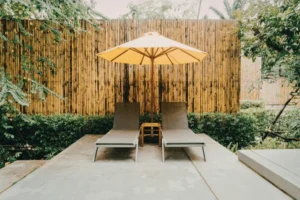
A stamped concrete patio can transform an outdoor living area into a more attractive space for entertaining, dining, and relaxing.
Popular patio designs include:
- Ashlar slate
- Cobblestone
- Random stone
- Herringbone brick
- Flagstone
A contrasting border can define the patio and coordinate with the home’s architecture.

2. Pool Decks and Surrounds
Stamped concrete can be used around pools to create a coordinated decorative finish. Select texture and surface design with wet-weather traction in mind.
A contractor should also consider drainage, pool chemical exposure, and the sealer’s maintenance requirements.

3. Walkways and Entry Features
A stamped walkway can create a more distinctive transition between the driveway, front entry, and landscaping.
For traditional homes in communities such as New Canaan, Ridgefield, and Darien, brick or cobblestone patterns may complement the architectural style.

4. Decorative Commercial Areas
Stamped concrete can also suit selected commercial applications, including pedestrian walkways, courtyard areas, and entry features where appearance contributes to the customer experience.
However, high-traffic commercial surfaces may benefit from a simpler finish that is easier to maintain and repair.

Best Uses for Plain Concrete in Connecticut
Plain concrete is often the most practical choice when strength, cost, and ease of maintenance are the primary concerns.
Driveways
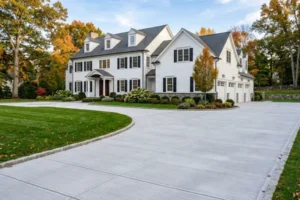
A properly installed broom-finished concrete driveway can handle everyday vehicle traffic, snow removal, and seasonal weather.
Important installation considerations include:
- Appropriate slab thickness
- A compacted gravel base
- Air-entrained concrete
- Proper control joints
- Adequate drainage
- Reinforcement where needed
Plain concrete is particularly cost-effective for long driveways or properties with multiple vehicles.

Garage Floors and Utility Slabs
Plain concrete is a practical option for garage floors, utility areas, and other spaces where durability and a level surface matter more than appearance.
A steel-trowel or broom finish may be appropriate depending on the intended use.

Foundations and Structural Applications
Foundations, retaining walls, and other structural concrete applications require engineering, reinforcement, and site-specific design. The decorative finish is secondary to the structural requirements.
For projects involving footings or structures near property lines, wetlands, or flood-prone areas, evaluate local permitting and site conditions before construction begins.

Which Option Adds More Property Value?
Stamped concrete installation and plain concrete installation can both be worthwhile investments. The best choice depends on the property’s needs and how the improvement fits into the overall design. Concrete patio ROI can surprisingly impact overall home value.
Stamped Concrete and Curb Appeal
In high-value Fairfield County markets, a well-designed patio, pool surround, or entry walkway can improve a property’s appearance and usability.
Stamped concrete may be especially attractive when the design complements the home’s exterior, landscaping, and other outdoor features.
However, stamped concrete doesn’t offer a universal dollar-for-dollar return on investment. Property value depends on the local market, project quality, buyer preferences, and the condition of the rest of the property.
Plain Concrete and Long-Term Value
Plain concrete provides value through practical performance and relatively low maintenance.
A durable driveway or walkway can improve daily usability without the added cost of decorative finishing. For large or utility-focused projects, the lower installation price may make plain concrete the better financial decision.
The best concrete patio or driveway isn’t necessarily the most expensive. It is the one that provides the right balance of cost, appearance, durability, and maintenance for your property.
Choosing a Concrete Contractor in Fairfield County
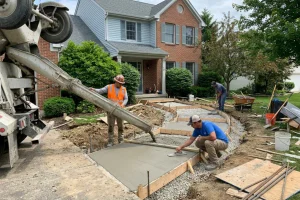
Installation quality is one of the most important factors in concrete longevity. This is especially true in Connecticut, where the weather places significant stress on exterior surfaces.
Before hiring a contractor, ask:
- What concrete mix and compressive strength do you recommend?
- Will the concrete be air-entrained?
- How will you prepare the subgrade and gravel base?
- What slab thickness is appropriate for the intended use?
- How will drainage be addressed?
- What reinforcement is required?
- How will control joints be placed?
- What sealer will be used for stamped concrete?
- How often will the surface need maintenance?
- Can you show examples of completed local projects?
For stamped concrete installation, ask to see projects with similar patterns, colors, and site conditions. Consistent pattern alignment, clean borders, and even color distribution are useful indicators of experience.
Permits and Site Conditions
Concrete work may require permits depending on the project and municipality. Driveways connecting to town roads, retaining walls, and work near wetlands or coastal flood zones may have additional requirements.
Drainage is another important consideration. Heavy rainfall, spring snowmelt, and saturated soil can undermine a slab if the site is not graded and prepared correctly.
A qualified local contractor should identify these issues before work begins and explain any required approvals.
Stamped Concrete vs. Plain Concrete: Which Should You Choose?
| Consideration | Stamped concrete | Plain concrete |
| Upfront cost | Higher | Lower |
| Appearance | Decorative and customizable | Simple and functional |
| Maintenance | Requires periodic sealer maintenance | Generally lower maintenance |
| Best applications | Patios, pool surrounds, decorative walkways | Driveways, garage floors, utility slabs |
| Repair appearance | Pattern and color matching can be difficult | Repairs are generally simpler |
| Property appeal | Can enhance outdoor design | Provides practical value |
Choose stamped concrete if you want a decorative surface that complements your home or business and are comfortable with the additional maintenance.
Choose plain concrete if you prioritize affordability, durability, and a straightforward finish for a driveway, garage, or utility area.
Both options can deliver long-term value when the mix, base preparation, drainage, and installation methods fit the property.

Get a Concrete Installation Estimate in Fairfield County
Planning a new patio, driveway, walkway, or other concrete project? Precision Concrete helps homeowners and businesses evaluate stamped concrete and plain concrete options based on their property, budget, and intended use.
Our service area includes Greenwich, Stamford, Norwalk, Westport, Darien, New Canaan, Ridgefield, Danbury, Trumbull, Shelton, Stratford, Bridgeport, and surrounding communities throughout coastal Connecticut.
Contact Precision Concrete to discuss your project and request a free estimate for your new plain concrete or stamped concrete installation. We can help you determine which concrete surface makes the most sense for your property and clearly explain the work involved.
Frequently Asked Questions
How much does stamped concrete cost in Connecticut?
Stamped concrete installation typically costs $15–$30 per square foot, depending on the pattern, colors, site conditions, and project size. A 500-square-foot patio may cost approximately $7,500–$15,000 before additional site-specific expenses.
Is stamped concrete worth the extra cost?
Stamped concrete can be worth the extra investment when appearance and outdoor living matter. It offers decorative patterns and colors that plain concrete cannot provide. However, it requires more maintenance, so homeowners should consider both the initial price and long-term upkeep.
What is the downside of stamped concrete?
The main disadvantages are its higher upfront cost, periodic sealer maintenance, and more challenging repairs. Cracks or surface damage can be more noticeable because they interrupt the decorative pattern. Proper installation and maintenance help reduce these concerns.
What is the downside of plain concrete?
Plain concrete offers fewer decorative options. While it is practical and cost-effective, it may not provide the same visual impact as stamped concrete for patios, pool areas, or front entry features. It still requires proper installation and periodic inspection.
How long does stamped concrete last in Connecticut?
A properly installed and maintained stamped concrete surface can last 25–30 years or longer. Longevity depends on concrete quality, base preparation, drainage, installation, and sealer maintenance. Poor installation or neglect can lead to deterioration much sooner.
Can stamped concrete be used for a driveway?
Yes. Stamped concrete can be used for residential driveways when the slab thickness, concrete mix, reinforcement, and base preparation suit vehicle traffic. Plain concrete is often the more economical choice for long driveways, but you may choose stamped concrete when decorative appeal matters.
Is plain concrete better for Connecticut winters?
Plain concrete is not automatically more resistant to winter damage. Both stamped and plain concrete require appropriate air-entrained concrete, proper base preparation, drainage, and control joints. Stamped concrete also requires attention to the condition of its sealer.
Can I install stamped concrete myself?
You can install stamped concrete as a DIY project, but it requires precise timing and coordinated finishing. Mistakes in the stamping window can cause blurred patterns, uneven texture, or inconsistent color. For a large patio or driveway, professional installation is generally the safer choice.