Skip to content

Choosing the right types of concrete mixes is one of the most important decisions in any renovation project. The mix that works well for a backyard patio may not be the best choice for a driveway, walkway, retaining wall, or foundation. And specialized mixes may be needed for post anchoring and other specific design and installation projects. The unique climate and environment must also be considered when choosing the right concrete mix.
For property owners in Fairfield County, CT, mix selection matters even more. Concrete must withstand seasonal moisture, freeze-thaw cycles, deicing products, and, in some coastal areas, salt exposure.
The best concrete mix depends on the application, required strength, exposure conditions, and installation requirements. For many exterior residential projects in Fairfield County, a properly specified 4,000 PSI air-entrained concrete mix provides a strong starting point. At the same time, foundations and other structural applications may require higher-strength mixes.
This guide explains the main types of concrete mixes, what the different strength ratings mean, and how to choose the right option for your project.

Quick Comparison: Common Types of Concrete Mixes
| Type of Concrete Mix | Best For | Key Benefit | Typical Consideration |
| Standard ready-mix | General residential and commercial projects | Consistent, professionally batched material | Strength should match the application |
| Air-entrained concrete | Exterior driveways, patios, and walkways | Better freeze-thaw resistance | Especially important in Connecticut |
| High-PSI concrete | Foundations, retaining walls, structural slabs | Higher compressive strength | May require engineering specifications |
| Fiber-reinforced concrete | Driveways and slabs | Helps reduce certain types of cracking | Does not replace proper reinforcement when required |
| Self-consolidating concrete | Complex forms and specialty pours | Flows into tight spaces | Less common for standard residential flatwork |
| Lean concrete | Base or non-finished applications | Economical for limited uses | Not suitable as a substitute for finished structural concrete |
The right choice is not simply about ordering the strongest concrete available. Choosing the right concrete mix means balancing strength, durability, workability, exposure conditions, and the demands of the finished project.
What Is Concrete Made Of?
Concrete is made from four primary ingredients:
- Cement, which binds the materials together
- Fine aggregate, usually sand
- Coarse aggregate, such as gravel or crushed stone
- Water, which activates the cement and allows the mix to hydrate
Additional materials, called admixtures, may also be included to improve specific characteristics such as freeze-thaw resistance, workability, curing, or moisture resistance.
The proportions of these ingredients directly affect the finished concrete.
Why the Water-to-Cement Ratio Matters
One of the most important factors in concrete performance is the water-to-cement ratio.
Adding extra water can make concrete easier to place and finish, but too much water can increase porosity and reduce strength. A properly designed mix balances workability with long-term durability.
For exterior projects in Fairfield County, controlling moisture absorption is especially important. Concrete exposed to repeated freezing and thawing can deteriorate when absorbed water freezes and expands inside the material.
That is why the right mix design, proper placement, and professional finishing all work together to create durable concrete.

The Main Types of Concrete Mixes
1. Standard Ready-Mix Concrete
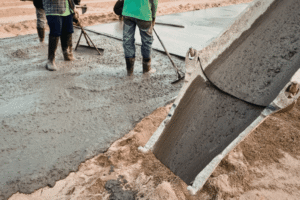
Standard ready-mix concrete is produced at a batching plant and delivered to the project site. It is one of the most common options for residential and commercial construction.
Ready-mix concrete can be specified for different strength requirements, making it suitable for projects such as:
- Driveways
- Patios
- Walkways
- Garage floors
- Foundations
- Commercial slabs
One of its biggest advantages is consistency. A professionally batched mix allows the contractor to specify the appropriate strength and characteristics for the project rather than relying on manually measured materials.
For many Fairfield County residential projects, ready-mix concrete is the practical foundation for a durable installation.
2. Air-Entrained Concrete
Air-entrained concrete contains microscopic air bubbles created through a specialized admixture.
These small air pockets help provide space for moisture inside the concrete to expand when it freezes. This makes air-entrained concrete particularly valuable for exterior applications exposed to Connecticut’s winter conditions.
Air-entrained concrete is commonly used for:
- Concrete driveways
- Sidewalks
- Walkways
- Patios
- Exterior slabs
For exterior flatwork in a freeze-thaw climate, air entrainment can play an important role in long-term durability.
3. High-PSI Structural Concrete
Concrete strength is commonly measured in pounds per square inch, or PSI.
High-PSI mixes are generally used when a project requires greater compressive strength or must withstand significant structural loads.
Applications may include:
- Foundations
- Retaining walls
- Structural slabs
- Commercial construction
- Heavily loaded areas
A higher PSI rating alone does not guarantee a better installation. The mix still needs to be appropriate for the site’s conditions, reinforced and installed correctly where required, and properly cured.
4. Fiber-Reinforced Concrete
Fiber-reinforced concrete contains small synthetic or steel fibers distributed throughout the mix.
These fibers can help reduce certain types of shrinkage cracking and improve resistance to impact and surface stress.
Fiber reinforcement may be useful for:
- Residential driveways
- Garage slabs
- Commercial floors
- Larger concrete slabs
However, fiber reinforcement should not automatically be treated as a replacement for rebar, wire mesh, or other reinforcement specified for a structural project.
5. Self-Consolidating Concrete
Self-consolidating concrete is a highly workable mix designed to flow into forms without requiring the same level of mechanical vibration as conventional concrete.
It is often used for:
- Complex structural forms
- Precast concrete
- Architectural concrete
- Areas with congested reinforcement
While it offers advantages for specialized applications, it is less commonly used for standard residential patios and walkways.
Types of Concrete Mixes and Grades: What Do the PSI Numbers Mean?
When comparing concrete mixes, homeowners often see different PSI ratings.
In general, a higher PSI rating indicates greater compressive strength. However, the appropriate strength depends on the project.
| Concrete Strength | Common Applications |
| 2,500 PSI | Light-duty or limited applications |
| 3,000 PSI | Some interior and non-structural work |
| 3,500 PSI | General residential applications depending on exposure |
| 4,000 PSI | Common choice for durable exterior flatwork |
| 4,500–5,000 PSI | Foundations, retaining walls, and higher-demand projects |
| 6,000+ PSI | Specialty or engineered structural applications |
For many exterior residential projects in Fairfield County, 4,000 PSI concrete is a common baseline, as the finished surface must withstand significant exposure to weather.
The final specification should always reflect the project’s design, intended use, site conditions, and any applicable engineering or building requirements.

How to Choose the Right Concrete Mix for Your Project
The easiest way to approach concrete selection is to start with the application.
Best Concrete Mix for a Driveway
A driveway needs to support repeated vehicle loads while also handling moisture, freezing temperatures, and surface wear.
For many residential projects, the best mix includes:
- Appropriate compressive strength for vehicle traffic
- Air entrainment for exterior exposure
- A properly prepared and compacted base
- Correct slab thickness
- Proper control joints
- Professional curing
For Fairfield County homes, a 4,000 PSI air-entrained mix is often used for exterior residential driveway applications, with project-specific adjustments based on expected loads and site conditions.
Heavy vehicles or unusual site conditions may require a different specification.
Best Concrete Mix for a Walkway
The best concrete mix for a walkway should provide durability and support a safe, slip-resistant surface.
For exterior Connecticut walkways, the mix and installation should account for:
- Freeze-thaw exposure
- Moisture
- Deicing products
- Proper drainage
- Surface traction
A broom finish is a common choice because it creates texture for improved traction.
For many residential walkways, a durable exterior-grade, air-entrained concrete mix with appropriate strength is an effective solution.
Concrete Mix for a Patio
The right concrete mix for a patio depends partly on whether the surface will be plain, broom-finished, stamped, exposed aggregate, or decorative.
A patio should be designed around:
- Exterior weather exposure
- Drainage
- Desired finish
- Expected foot traffic
- Freeze-thaw resistance
For many Fairfield County patios, a properly specified 4,000 PSI air-entrained mix can provide the strength and durability needed for exterior use.
Decorative concrete may also require additional attention during placement, finishing, curing, and sealing to protect the appearance of the finished surface.
Best Concrete Mix for Foundations
The best concrete mix for foundations depends on structural requirements, soil conditions, groundwater exposure, and the building’s design.
Foundation concrete often requires:
- Higher compressive strength
- Low permeability
- Proper reinforcement
- Appropriate curing
- Drainage and waterproofing considerations
For many projects, foundation mixes may fall in the 4,500 to 5,000 PSI range, but the final mix design should follow the requirements of the specific project and any applicable engineering plans.
What Type of Sand Should Be Used in a Concrete Mix?
The type of sand used in a concrete mix matters because it affects workability, bonding, and the overall structure of the finished concrete.
Concrete typically uses clean, properly graded concrete sand.
The ideal material should generally be:
- Clean and free from excessive clay or organic material
- Properly graded for concrete production
- Compatible with the other aggregate in the mix
Using contaminated or poorly graded sand can interfere with the concrete’s performance.
For most property owners, the key takeaway is that the quality of concrete depends on more than just the amount of cement in the mix. The aggregate, water content, mix proportions, and batching process all affect the finished product.

Why Fairfield County’s Climate Affects Concrete Selection
The best concrete for Fairfield County homes must account for local environmental conditions. Understanding these impacts will help you find the right types of concrete mixes for your project needs.
Connecticut concrete can be exposed to:
- Repeated freeze-thaw cycles
- Heavy rain and seasonal moisture
- Snow and ice and large temperature drops
- Deicing products and highly corrosive chemicals
- Coastal salt exposure in some areas
- Seasonal weather shifts throughout the year
These conditions can contribute to cracking, surface scaling, spalling, and moisture-related deterioration when concrete is poorly specified or installed.
That is why choosing the right mix is only one part of the process.
A durable concrete project also depends on:
- Proper site preparation
- A stable, compacted base
- Correct mix selection
- Appropriate reinforcement where needed
- Proper placement and finishing
- Correct joint placement
- Adequate curing
- Long-term maintenance and protection
Even an excellent concrete mix can underperform if the base fails, water collects beneath the slab, or the concrete is improperly finished or cured.
Common Mistakes When Choosing a Concrete Mix
Before starting a concrete project, avoid these common mistakes.
Choosing Concrete Based on Price Alone
A lower-cost mix may not provide the durability required for the project. Replacing failed concrete is significantly more expensive than specifying the right material from the beginning.
Assuming Stronger Is Always Better
Higher PSI concrete is not automatically the right choice. The mix must match the application and installation requirements.
Adding Too Much Water on Site
Excess water can make concrete easier to work with, but it can also reduce strength and increase porosity.
Ignoring the Base
Concrete is only as reliable as the support beneath it. Poor drainage or inadequate compaction can contribute to movement and cracking.
Treating All Exterior Concrete the Same
A decorative patio, heavily used driveway, and structural foundation all have different performance requirements.

Do You Need a Professional to Choose the Right Concrete Mix?
For a small, non-structural project, homeowners may be able to select an appropriate bagged mix based on the manufacturer’s recommendations.
For larger projects, however, professional guidance can help avoid expensive mistakes.
A qualified concrete contractor can evaluate:
- The intended use of the slab
- Soil and site conditions
- Drainage
- Weather exposure
- Required thickness
- Reinforcement needs
- Appropriate concrete strength
- Surface finish
- Long-term maintenance considerations
At Precision Concrete, we help property owners throughout Fairfield County choose concrete solutions based on the specific needs of the project—not a one-size-fits-all approach.
Whether you are planning a new driveway, patio, walkway, foundation, or retaining wall, the right mix is only the beginning. Proper preparation and installation are equally important to long-term performance.
Contact Precision Concrete to discuss your project and request a free estimate. Our team can help you choose the right concrete solution for your property and the demands of Connecticut’s climate.
Choose the Right Concrete Mix for a Project Built to Last
Choosing the right concrete mix is about more than selecting a PSI rating. The best results come from matching the mix, base preparation, reinforcement, drainage, finishing, and curing process to the specific demands of your property and project. In Fairfield County, where concrete must withstand moisture, freeze-thaw cycles, and seasonal weather changes, getting those decisions right from the start can make a significant difference in long-term performance.
Whether you are planning a new concrete driveway, patio, walkway, foundation, or retaining wall, Precision Concrete can help you choose the right types of concrete mixes for your needs. Our experienced team evaluates your project, site conditions, and intended use to deliver concrete work built for durability and lasting value.
Ready to start your project? Contact Precision Concrete today to request a free estimate and discuss the right concrete solution for your Fairfield County property.

Frequently Asked Questions About Concrete Mixes
What are the different types of concrete mixes?
The most common types of concrete mixes include standard ready-mix, air-entrained concrete, high-PSI structural concrete, fiber-reinforced concrete, and self-consolidating concrete. The right option depends on the project’s structural requirements, weather exposure, intended use, and desired finish.
What is the best concrete mix for a patio?
For many exterior patios in Fairfield County, a properly specified 4,000 PSI air-entrained concrete mix is a common choice. The final mix should also account for the desired finish, drainage, weather exposure, and whether the patio will use decorative or stamped concrete.
What is the best concrete mix for a walkway?
The best concrete mix for a walkway should be durable enough for exterior weather exposure and freeze-thaw conditions. Air-entrained concrete with appropriate compressive strength is commonly used for Connecticut walkways, along with proper base preparation, drainage, and a textured surface finish.
What is the best concrete mix for foundations?
Foundation concrete typically requires a higher-strength, lower-permeability mix appropriate for the building’s structural requirements and site conditions. Many foundation projects may use concrete in the 4,500-5,000 PSI range, but final specifications should follow the project’s plans and applicable requirements.
What type of sand should be used in a concrete mix?
Concrete generally uses clean, properly graded concrete sand. The sand should be free of excessive clay, silt, and organic contaminants, as these impurities can affect bonding, workability, and the long-term performance of the finished concrete.
How do I choose the right concrete mix?
Choosing the right concrete mix starts with the application. Consider the required strength, weather exposure, expected loads, site conditions, desired finish, and local climate. For larger projects, working with an experienced concrete contractor can help ensure the mix and installation method are appropriate for long-term performance.